
What a buyer funding from crypto actually needs to have ready
The short answer
A Dubai purchase funded from crypto passes through three routine checks: the licensed provider verifies its client from AED 3,500, the bank reviews the dirham credit, and since 1 July 2022 the broker reports any freehold sale funded from a virtual asset, with no minimum amount. A documented history passes all three, so assemble it before you make an offer.
A buyer who can show where their crypto came from gets through every check on a Dubai purchase, and more of that history survives than most holders expect. The checks are real: a licensed provider verifies its client, a bank looks at a large credit, and the broker files a routine report. None of them is a verdict on the buyer. They are paperwork, and paperwork done before you make an offer is paperwork nobody notices.
By House Of Orange editorial. A licensed Dubai real estate brokerage, ORN 49865, at The Opal Tower, Business Bay. About the firm

Key points
- What gets you through
- A documented history: the bank transfers that funded the purchase of the asset, the chain since, and what you declared at home
- Provider's checks start at
- AED 3,500 for an occasional transaction, counting linked transactions together. Every property purchase is above it, so expect them as standard
- Enhanced checks
- Source of funds and source of wealth, identified and verified, where a provider assesses a client as higher risk
- Broker's report
- Routine, on every freehold sale paid in or converted from a virtual asset. In force since 1 July 2022, with no minimum amount
- Cash is treated the same way
- Reportable from AED 55,000 in physical cash, in one payment or several
- Records
- Kept for not less than five years, by the broker and by the provider
What the conversion provider asks for, and when
A provider licensed by the Virtual Assets Regulatory Authority works to VARA's Compliance and Risk Management Rulebook, which sets out when checks are required. Every property purchase is well above the amounts, so expect these as standard and plan for them.
Who you are, at the start
Client due diligence is required when a business relationship begins, and for any occasional transaction equal to or exceeding AED 3,500, whether it is carried out in one transaction or in several that appear to be linked.
Where the asset is coming from
Before initiating any transfer of virtual assets worth more than AED 3,500, a provider must hold the originator's name, wallet address or account number, and residential or business address, and the beneficiary's name and wallet address. Sending from a wallet or an exchange account that is clearly yours keeps this step short.
How you came to hold it, where the provider asks
For a client assessed as high risk, the rulebook requires the provider to identify and verify the source of funds and the source of wealth. How a provider assesses risk is its own policy. A large first conversion is a transaction any provider will want to understand, which is one more reason to open the relationship early.
Where the dirhams go
For a higher risk client the rulebook requires the first transaction to come through an account in the customer's own name at a licensed institution. Treat that as the rule for the money going out as well: dirhams to an account in the name of the person buying.
What counts as evidence, including for coins bought years ago
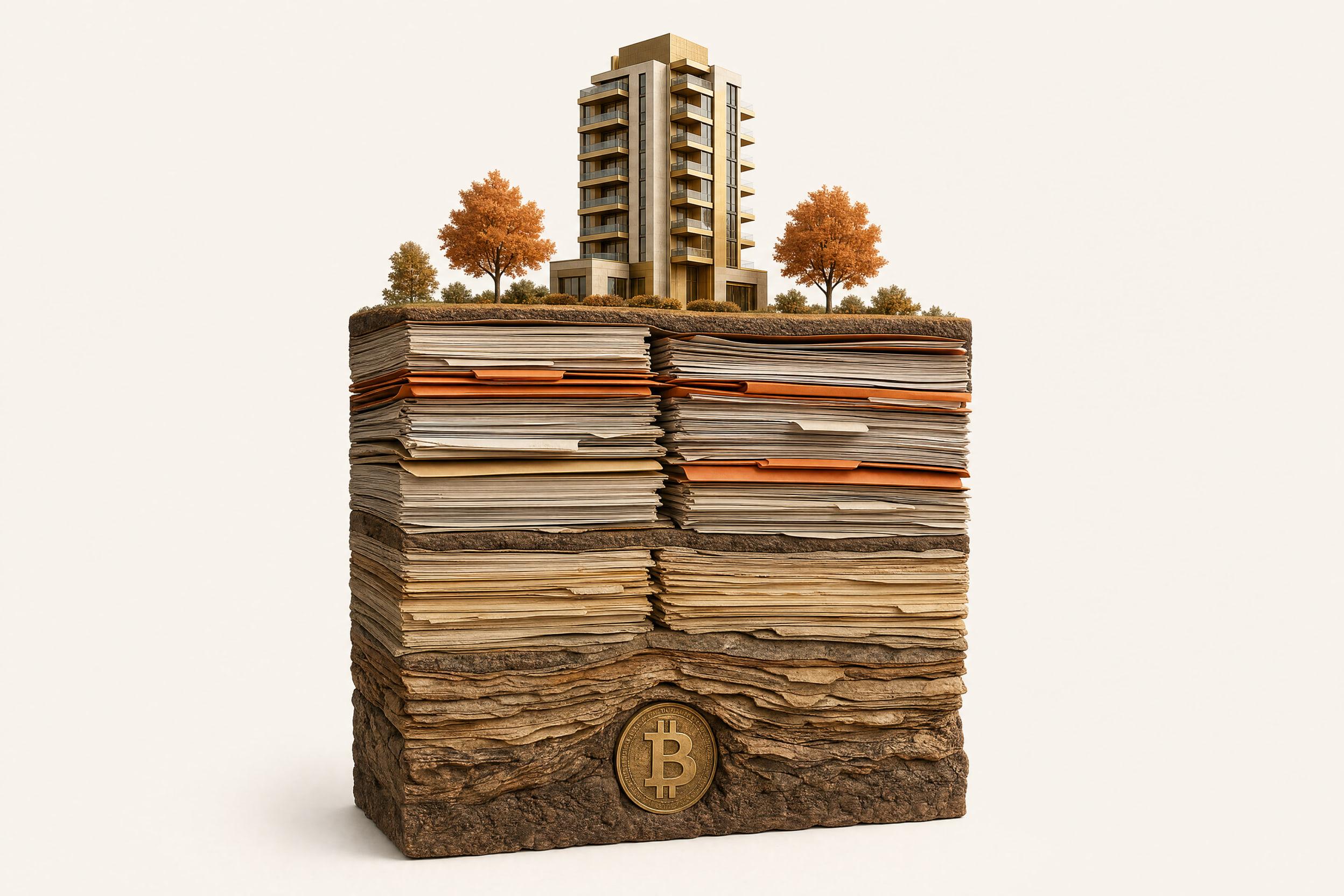
This is the case buyers worry about most: the asset is real, the gain is real, and the record of how it was acquired sat on a platform that has since closed. More survives than people expect. No regulator publishes a list of acceptable evidence, so the provider decides under its own policy, and it is worth asking two providers if the first is unsure.
What helps is knowing which records survive a closure.
Your bank statements survive
The transfers from your bank to the exchange are on your bank's records, not the exchange's. They show what you put in and when, which is the beginning of the story and the part most people forget they can still get.
The chain survives
Withdrawals from the exchange to your own wallet, and every movement since, are on a public ledger permanently. A transaction history that runs unbroken from a withdrawal years ago to the wallet you hold today is evidence that does not depend on anybody's customer service.
What you declared survives
Tax returns or wealth declarations at home that list the holding, dated before you thought of buying property, are evidence made at a time when you had no reason to shape it.
The exchange's own records, where you still can
Trade histories, account statements and deposit confirmations. Where a platform is in an insolvency process, the claim documents from that process are evidence of what you held. Export everything from any platform you use today, before you need it.
A routine report, and what it means for you
Real estate brokers and agents in the UAE are designated non-financial businesses under the anti money laundering framework, supervised by the Ministry of Economy and Tourism. The executive regulations, Cabinet Resolution No. 134 of 2025, name them when they conclude transactions on behalf of customers in relation to the purchase or sale of real estate.
On 7 July 2022 the Ministry announced a circular, applying from the beginning of that month, under which brokers and agents report three kinds of freehold sale as a matter of course. One is about cash. Two are about virtual assets.
Cash of AED 55,000 or more
Single or multiple cash transactions amounting to or exceeding AED 55,000, for the whole of the property's value or part of it.
Payment in a virtual asset
Any freehold sale where the method of payment is a virtual asset, for the whole value or part of it. There is no minimum.
Funds converted from a virtual asset
Any freehold sale where the funds used were transferred from a virtual asset into cash, for the whole value or part of it. This is the ordinary purchase funded from crypto, converted properly through a licensed provider, and it is reported as routine in the same way a large cash purchase is.
The bank and the trustee office
The dirhams from the conversion arrive in a bank account, and the bank is a financial institution under the same law with its own duty to understand a large credit. There is no published schedule for what a bank asks or how long it takes. Tell your bank what is coming and from whom before it arrives, and keep the provider's trade confirmation, which shows the asset sold, the rate and the dirhams paid.
On the trustee office we have less to tell you than you would expect. We have found no Land Department or federal source that says what a registration trustee checks on source of funds. What is documented is the broker's duty, set out above. If you are told what the trustee will or will not ask, it is fair to ask where that is written down.
Timing, and why one clean conversion is the fast route
A cash purchase of a completed property commonly transfers within two to four weeks of the memorandum of understanding, and registration takes the same time however the dirhams were raised. What a purchase funded from crypto adds is a set of checks with no published duration, carried out by firms that are not party to your contract. The order that works is evidence first, conversion second, offer third.
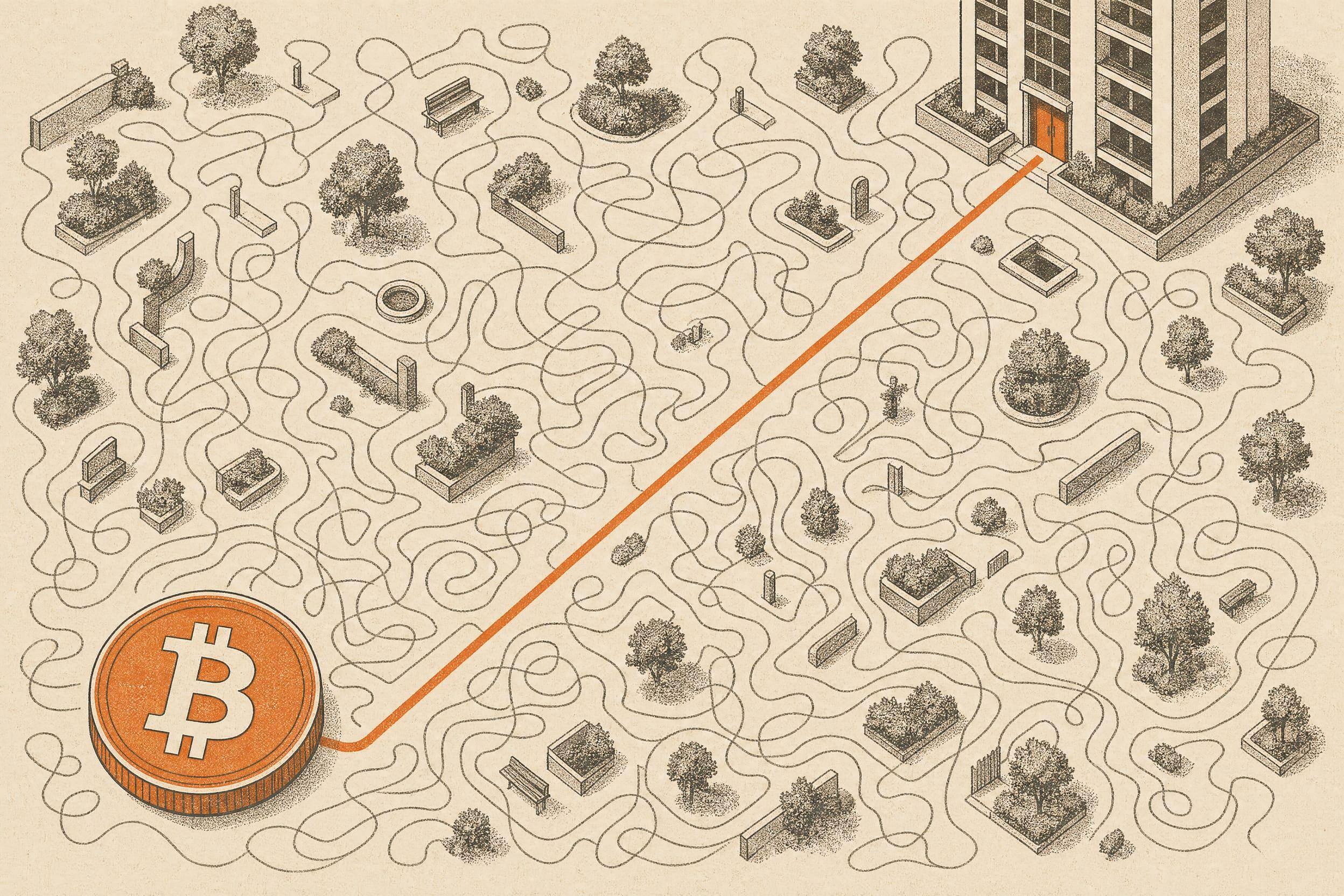
Buyers sometimes ask whether several smaller transfers would be simpler. The numbers say one is.
The purchase: AED 2,126,720
A price of AED 2,000,000 plus AED 126,720 in transfer fee, trustee fee and commission.
Against the AED 3,500 threshold: 608 transfers
2,126,720 divided by 3,500 is 607.6. It would take 608 separate transfers to keep each one at or under the amount, and the rulebook counts transactions that appear to be linked as one.
Against the AED 55,000 cash threshold: not relevant
That threshold is for physical cash. The two virtual asset cases in the broker's report have no threshold, so the size of the transfer changes nothing.
Where this leads
The other parts of the same purchase
What this page relies on
Regulators and issuers only. Each link carries the date we last read it against the text above.
- Compliance and Risk Management Rulebook, Part III, E: client due diligence
Virtual Assets Regulatory Authority
- Compliance and Risk Management Rulebook, Part III, G: FATF Travel Rule
Virtual Assets Regulatory Authority
- Ministry obligates real estate brokers and agents to report and to keep records for at least five years, 7 July 2022
Ministry of Economy and Tourism
- Cabinet Resolution No. (134) of 2025, executive regulations of Federal Decree by Law No. (10) of 2025 on anti money laundering
Central Bank of the UAE rulebook
- Virtual Assets and Related Activities Regulations 2023, prohibited virtual assets
Virtual Assets Regulatory Authority
- Payment Token Services Regulation, Article 2: prohibitions, including privacy tokens
Central Bank of the UAE
- Public register of virtual asset service providers
Virtual Assets Regulatory Authority
Paying from crypto, answered straight
The questions people type, with the rule and the figure rather than a reassurance.
Yes, as with any large purchase, and a documented history gets through. A VARA licensed conversion provider carries out client due diligence from AED 3,500 and, for a client it assesses as higher risk, identifies and verifies the source of funds and of wealth. Your broker collects identification and the contracts, and your bank has its own review when the dirhams arrive.
Yes, as a matter of routine. Since 1 July 2022 brokers and agents report any freehold sale where the payment is a virtual asset, or where the funds were converted from one, for all or part of the value, with no minimum amount. Physical cash is treated the same way from AED 55,000. The report follows from the method of funding, not from anything about the buyer.
Identification, and the originator information VARA's rulebook requires for any transfer above AED 3,500: your name, wallet address and residential address. Where a provider asks about source of funds and of wealth, it means records of how the asset was acquired. No regulator publishes a fixed list, so ask the provider for its own before you start.
More survives than you might expect. Your bank still holds the transfers that funded the account, and withdrawals to your own wallet remain on the public ledger permanently. Any purchase above AED 3,500 brings due diligence, so assemble those records before you offer, and ask the provider whether the history is enough.
There is no published service time, from any regulator or provider, so nobody can promise you one. A completed property commonly transfers within two to four weeks of the memorandum of understanding, and the checks have to be finished inside that if you sign first. Start with the provider before you make an offer and the question never arises.
Get the answer for your purchase
These pages are general by definition. What your own purchase needs depends on what you hold, where it is held, who you are buying from and what the contract already says. Ask, and you will get the rule and the number.
What we will tell you
- Whether the plan is permitted
- Which leg of your purchase the Central Bank rule touches and which it does not, before you agree anything with a seller or a developer.
- What to ask a conversion provider
- The licence to ask for, the regulation it sits under, and the questions about spread and fee that get a number rather than a reassurance.
- What paperwork to start now
- The source of funds evidence a purchase funded from crypto draws, and how early it has to exist.
- What belongs in the contract
- A conversion deadline, and what happens if it is missed, written into the memorandum of understanding rather than left to goodwill.