
The service charge is the number that decides what you keep
It is the cost owners find out about last and argue about most, and it is the one recurring charge on a Dubai property that nobody can opt out of. It is also, unlike almost everything else quoted at a buyer in this market, a published figure you can look up for a specific building before you commit to it.
The short answer
A Dubai service charge is billed per square foot per year and is paid by the owner rather than the tenant. It must be approved by RERA before it can be collected, approved rates are published on the Dubai Land Department's service charge index, and payments are held in Mollak, the regulator's escrow platform.
- Who pays
- The owner, not the tenant, and whether or not the property is occupied
- How it is billed
- Per square foot of the unit per year, usually in quarterly instalments
- Who approves it
- RERA, the Dubai Land Department's regulator. A budget that has not been approved cannot be collected
- Where the money sits
- Mollak, the regulator's escrow platform, with one account per jointly owned property
- The governing law
- Law No. 6 of 2019 on the ownership of jointly owned real property in Dubai
What a Dubai service charge actually pays for
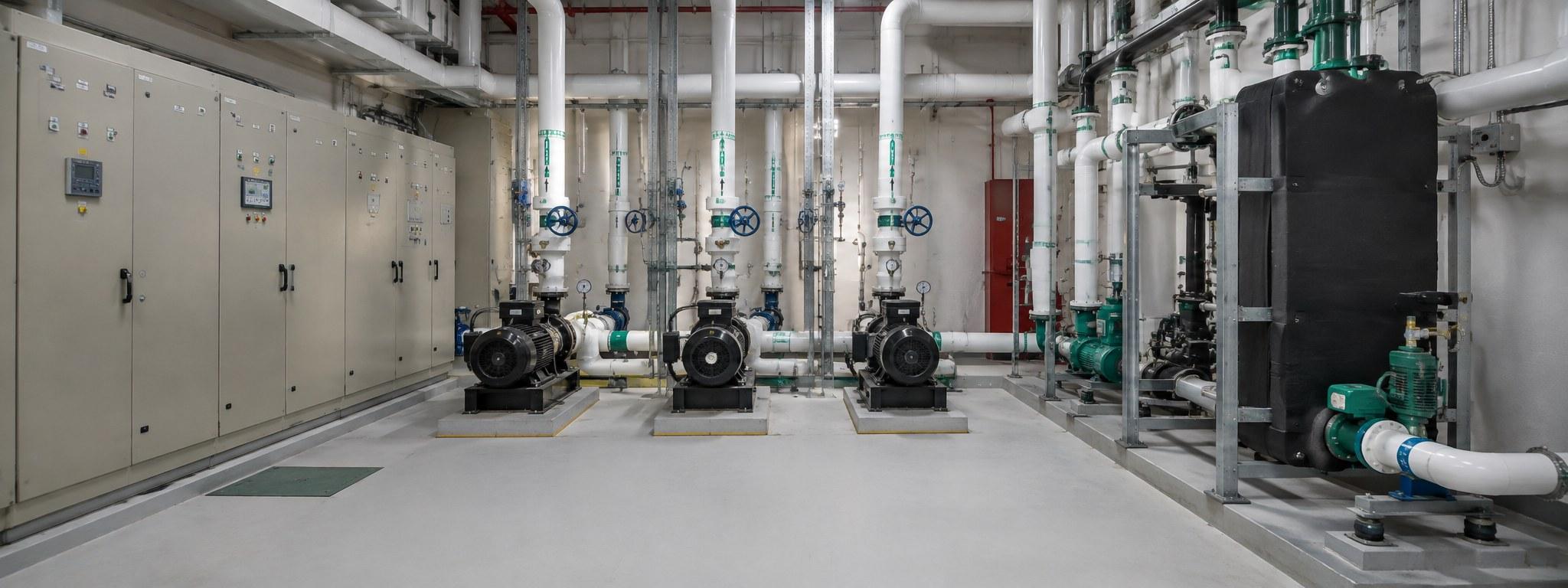
A service charge is not a fee the developer keeps. It is a budget, approved in advance, for running the parts of the property that no single owner owns: the lobby, the lifts, the corridors, the pool, the plant that cools the building, the insurance on the structure, and the company employed to administer all of it.
It arrives as one figure per square foot, which is why it looks arbitrary. It is not. Underneath it are separate funds with different jobs, and an owner who understands which is which can read a budget rather than simply react to a total.
The general fund
Day to day running: cleaning, security, lift maintenance, common area electricity and water, landscaping, pest control, the building's insurance premium and the management company's own fee. This is the bulk of most budgets and the part that moves with inflation and with how much the building actually has.
The reserve fund
Money set aside now for work that arrives later: replacing lifts, resurfacing car parks, renewing chillers, repainting the facade. A building with a thin reserve fund is not a cheap building. It is a building that will ask its owners for the money in a lump at the point the equipment fails.
The master community charge
In master developments the unit sits inside a community as well as inside a building, and both bill separately. Roads, community landscaping, shared security and community amenities are charged on top of the tower's own budget. Two identical apartments in different communities can differ on this line alone.
District cooling, usually billed apart
In much of Dubai the air conditioning is supplied by a district cooling provider on its own contract, with its own capacity charge and consumption charge. It is not part of the service charge and does not appear on the same statement, which is exactly why it is the cost most often left out of a projection.
Why two apartments of the same size pay very different amounts
Owners compare service charges the way they compare rents, by the square foot, and then find that a neighbouring tower charges a third less for a unit of the same size. Neither figure is wrong. They are budgets for different buildings.
What moves the number is not the size of the apartment. It is what the building has, how tall it is, how many units carry the cost, and how honestly the reserve fund has been funded since handover. A tower with a pool on every fourth floor, valet parking and a concierge desk is expensive to run, and the people who pay for that are the owners rather than the residents who enjoy it.
Age matters in both directions. A new building has warranties still running and equipment that has not needed replacing, so its early budgets look light. A building fifteen years old has neither, and if the reserve fund was underfunded through the easy years the correction lands as a sharp increase rather than as a gradual one.
How to check whether the charge on your building is approved
This is the part most owners do not know is available to them. A service charge in Dubai is not set by the management company and simply issued. The budget has to be submitted to RERA, the Dubai Land Department's regulator, and approved before it can lawfully be collected, and the approved rates are published.
The Land Department maintains a service charge index that shows the approved figure per square foot for registered jointly owned properties. If the amount on your invoice does not match the approved rate for your building, that is a question with a clear answer rather than a matter of opinion, and it is the first thing to establish before any other argument.
Payments themselves run through Mollak, the regulator's platform for jointly owned property, which holds each building's money in its own account and pays approved expenses out of it. The point of it is that the money for your building can only be spent on your building. It is also why an owner can ask for a statement and expect one to exist.

What to do if you think yours is too high
There is a route, and it is not withholding payment. Arrears sit against the unit rather than against the owner personally, and they surface at the worst possible moment: the developer will not issue a no-objection certificate while anything is outstanding, which means the sale stops at the trustee office on the day it was booked to complete.
The route that works is the budget itself. Ask the management company for the approved budget and the latest statement, in writing. Compare the collected total against the approved rate and the number of units. Attend the general assembly, which is where the budget is presented and where questions are minuted rather than deflected. Where an owners committee exists, that is the body with standing to press the point on behalf of everyone.
If the figure being collected does not match what was approved, or the assembly is not being held, the escalation is to RERA rather than to the management company that set the budget. That is a slower path than an argument by email, and it is the one that produces a result.
What this means when you are buying
The service charge is the difference between a property that performs and one that merely appeared to. It is a fixed annual cost that continues whether the unit is occupied or empty, and it is the single largest gap between what a property is advertised to produce and what actually reaches the owner's account.
It is also entirely knowable before you commit. The rate is published, the building's budget exists, and the district cooling contract can be read. There is no reason for this to be a surprise in year one, and it usually is, because it is nobody's job to raise it during a sale unless the buyer asks.
We give the service charge for a specific property before an offer goes in, alongside what comparable units in that building are actually renting for. On some buildings it changes the arithmetic, and it is better to know that while you can still walk away.
Owning, answered straight
The questions that come up most often on this, with the figures rather than a brochure answer.
The owner. The service charge is billed against the unit and remains the owner's liability whether the property is occupied, empty or rented out. A tenant pays for what they consume, which is DEWA, district cooling and internet, along with the municipality housing fee collected through the DEWA bill. A tenancy contract cannot move the service charge onto a residential tenant.
Mollak is the Dubai Land Department's system for jointly owned property, through which service charges are billed and collected. Each registered building or community holds its money in its own account, and approved expenses are paid out of it, so funds collected from one property cannot be spent on another. It is also the record an owner can ask a management company to produce.
Yes, but not unilaterally. A revised budget has to be submitted to RERA and approved before the new rate can be collected, and the approved rates for registered jointly owned properties are published on the Dubai Land Department's service charge index. An increase that has not been through that process is a question worth raising in writing before it is paid.
Arrears attach to the unit. The immediate consequence most owners meet is that the developer will not issue a no-objection certificate while anything is outstanding, which stops a sale at the point of transfer. Beyond that, management companies can pursue unpaid charges through the regulator and the courts. Disputing a budget and withholding payment are separate decisions, and only one of them has a route that works.
No. Rent is received gross and the service charge is paid separately by the owner, so the figure that matters is what remains after it. Add the district cooling capacity charge where the building is on district cooling, since that is billed under its own contract and does not appear on the service charge statement at all.
More on how Dubai property actually works.
Get the answer for your property
This page is general by definition. The version that matters accounts for your building, your service charge and the contract in front of you, and that is a conversation rather than an article.
What we will tell you
- Which end of the district
- Within one community the gap between two towers, or two streets, is routinely wider than the gap between communities. That is the part a portal map cannot show you.
- What the service charge does
- Read per square foot against the buildings beside it, because it comes out of the return every year and rarely appears in the pitch.
- What is still to be built
- The plot next door, what is approved on it, and which views are temporary. Worth knowing before you pay for one.
- What actually transacted
- Recent sale and lease prices in the specific building, rather than the asking prices still sitting on the portals.